The following document is an archived chapter with end notes A First Look at Communication Theory by Em Griffin, Andrew Ledbetter, and Glenn Sparks, the leading college text in the field of communication theory (all editions published by McGraw-Hill). from a previous edition of This theory last appeared in the 9 The theory is no longer covered in a full chapter of the current edition. This document is posted on the resource website for the text www.afirstlook.com All material is copyright © Em Griffin or used by permission of the copyright holder (copyright permission does not extend to online use.) (Note that some cartoons reproduced in the textbook could not be included in the archived documents because th Edition Speech Codes Theory – Gerry Philipsen Machine Translated by Google By speech code, Philipsen means "a historically enacted, socially constructed system of terms, meanings, premises, and rules pertaining to communicative 3 Philipsen decided to start in the Chicago community where he worked, a place he dubbed "Teamsterville," since driving a truck was the typical job for men in the community. For three years Philipsen talked to kids on street corners, women on front porches, men in corner bars, and everyone at the settlement house where he worked so that he would be able to describe the speech code of Teamsterville residents. conduct." soon made evident, Gerry Philipsen was doing ethnography. Hymes called for a "close to the ground" study of the great variety of communication practices around the world. While at Northwestern, Philipsen read an article by University of Virginia anthropologist and linguist Dell Hymes, "The Ethnography of Speaking." After three years on the staff of a youth organization, I resigned to pursue full-time graduate work in communication at Northwestern University. Gerry Phil-ipsen was one of my classmates. When I finished my Ph.D. course work, the labor market was tight; I felt fortunate to receive an offer to teach at Wheaton College. A while later I heard Gerry was doing youth work on the south side of Chicago. I remember thinking that while my career was progressing, Gerry's was going backwards. How wrong I was. As articles in the Quarterly Journal of Speech Even though the people of Teamsterville spoke English, Philipsen noted that their whole pattern of speaking was radically different from the speech code he knew and heard practiced within his own family of origin, by his friends at school, and across many talk shows on radio and TV. The stark contrast motivated him to conduct a second, multiyear ethnographic study, which began while he was teaching communication at the University of California, Santa Barbara, and continued when he moved on to the University of Washington. Although most of his "cultural informants" were from Santa Barbara or Seattle, the speech code community from which they were drawn was not confined to the West Coast of the United States. He labeled them the "Nacirema" ( American spelled backward), because their way of using language was intelligible to, and practiced by, a majority of Americans. Typical Nacirema speech is a "generalized US conversation that is carried out at the public level (on televised talk shows) and at the 418 1 2 of Gerry Philipsen Ethnography The work of a naturalist who watches, listens, and records communicative conduct in its natural setting in order to under-stand a culture's complex web of meanings. • Speech Codes Theory CHAPTER 33 Socio-cultural tradition Objective Interpretive Machine Translated by Google Speech code A historically enacted, socially constructed system of terms, meanings, premises, and rules pertaining to communicative conduct. THE DISTINCTIVENESS OF SPEECH CODES 6 4 CHAPTER 33: SPEECH CODES THEORY 7 about talk. As Philipsen intended, the Teamsterville and Nacirema ethnographic studies provided rich comparative data on two distinct cultures. But he also wanted to go beyond the mere description of interesting local practices. His ultimate goal was to develop a general theory that would capture the relationship between communication and culture. Such a theory would guide cultural researchers and practitioners in knowing what to look for and would offer clues on how to interpret the way people speak. Based on the suggestion of Hymes, Philipsen first referred to his emerging theory as the ethnography of communication. He has found, however, that many people can't get past the idea of ethnography as simply a research method, so now that his theory has moved from description to explanation, Philipsen labels his work speech codes theory. Specifically, the theory seeks to answer questions about the existence of speech codes, their substance, the way they can be discovered, and their force upon people within a culture. Most conversations start (and end) with the question Where are you from and what's your nationality? For Philipsen, me, and many Philipsen defines the Nacirema culture by speech practices rather than geo-graphical boundaries or ethnic background. It's a style of speaking about self, relationships, and communication itself that emerged for Philipsen as he spent hundreds of hours listening to tapes of dinner-table conversations, life stories, and ethnographic interviews. Just as cultural markers emerge gradually for the ethnographer, so the defining features of the Nacirema code will become more clear as you read the rest of the chapter. But for starters, one characteristic feature of that speech code is a preoccupation with metacommunication—their talk 5 interpersonal level in face-to-face interaction." reading this text, "Nacirema are us." 419 Philipsen outlines the core of speech codes theory in the following six general propositions. He is hopeful, however, that their presentation can be inter-twined with the story of his fieldwork and the contributions of other scholars that stimulated the conceptual development of the theory. I've tried to capture that narrative mix within the limited space of this chapter. He realized that Teamsterville residents say little until they've confirmed the nationality, ethnicity, social status, and place of residence of the person with whom they're speaking. When he entered the working-class, ethnic world of Teamsterville, Philipsen found patterns of speech that were strange to his ears. After many months in the community, he was less struck by the pronunciation and grammar that was characteristic of then Chicago mayor Richard J. Daley than he was by the practice of "infusing a concern with place into every conversation." Philipsen gradually found out that discussion of "place" is related to the issue of whether a person is from "the neighborhood." This concern isn't Philipsen describes an ethnographer of speaking as "a naturalist who watches, listens, and records communicative conduct in its natural setting." Proposition 1: Wherever there is a distinctive culture, there is to be found a distinctive speech code. Machine Translated by Google THE MULTIPLICITY OF SPEECH CODES Proposition 2: In any given speech community, multiple speech codes are deployed. 11 CULTURAL CONTEXT 9 In Teamsterville, children are "to be seen, not heard." Among the Nacirema, however, it would be wrong to try to keep a child quiet at the dinner table. Communication is the route by which kids develop "a positive self-image," a way to "feel good about themselves." Through speech, family members "can manifest their equality and demonstrate that they pay little heed to differences in status—practices and beliefs that would puzzle and offend a proper Teamster- 8 Philipsen was raised in a largely Nacirema speech community, but until his research in Teamsterville, he hadn't thought of his family's communication as a particular cultural practice. Its takenfor-granted quality illustrates the saying that's common among ethnographers: "We don't know who discovered water, but we're pretty sure it wasn't the fish." On the other hand, they are reassured by their perceived ability to speak better than those whom they refer to as lower-class "Hillbillies, Mexicans, and Afri-cans." Any attempt a man makes to "improve" his speech is regarded as an act of disloyalty that alienates him from his friends. Thus, the men define their way of speaking by contrasting it with other codes. merely a matter of physical location. Whether or not a person turns out to be from "around here" is a matter of cultural solidarity. Unlike Mister Rogers' Neighborhood, Teamsterville does not welcome diversity. As Philipsen heard when he first entered a corner tavern, "We don't want no yahoos around here." Viller.” While Philipsen discovered that Teamsterville conversation is laced with assurances of common place among those in the neighborhood, he found that speech among the Nacirema is a way to express and celebrate psychological uniqueness. Dinnertime is a speech event where all family members are encouraged to have their say. Everyone has "something to contribute," and each person's ideas are treated as "uniquely valuable." 420 Philipsen He did later added this proposition to the five he first stated in 1997. So because he and his students now observe times when people recognize and are affected by other codes or employ dual codes at the same time. In his Teamsterville ethnography, Philipsen stressed the unified nature of their neighborhood speech patterns. Yet he noticed that the men gauge their relative worth by comparing their style of talk with that of residents in other city neighborhoods. They respect, yet resent, middleclass northside residents who speak Standard English. Their repeated references to the importance of "a good talk" or "meaningful dialogue" distinguish speech that they value from "mere talk," or what today is parodied as "blah, blah, blah." As Philipsen notes, the Nacirema character-ized "their present way of speaking ('really communicating') by reference to another way of speaking and another communicative conduct that they had 10 now discarded." Dell Hymes suggested that there may be more than one code operating within a speech community. Some doctors, lawyers, clergy, and teachers have been socialized to follow a professional code of language use in public, but The awareness of another speech code is equally strong among the Nacirema. Machine Translated by Google THE SUBSTANCE OF SPEECH CODES Proposition 3: A speech code involves a culturally distinctive psychology, sociology, and rhetoric. CHAPTER 33: SPEECH CODES THEORY 13 But this third proposition asserts that whatever the culture, the speech code reveals structures of self, society, and strategic action. Sociology. Philipsen writes that "a speech code provides a system of answers about what linkages between self and others can properly be sought, and what symbolic resources can properly and efficiently be employed in seeking those linkages." Psychology. According to Philipsen, every speech code contains the notion of what it means to be a person within that speech community—the nature of the self. The Teamsterville code defines people as a bundle of social roles. In the Nacirema code, however, the individual is conceptualized as unique—someone whose essence is defined from the inside out. In contrast, Philipsen discovered that a verbalized code of dignity holds sway among the Nacirema. Dignity refers to the worth that an individual has by virtue of being a human being. Within a code of dignity, personal experience is given a moral weight greater than logical argument or appeal to authority. Communication is a resource to establish an individual's uniqueness. 15 recognize and use different rules of speech when talking with others in a locker room, kitchen, or garage. In his book The Presentation of Self in Everyday Life, With this proposition, Philipsen takes a step back from the cultural relativism that characterizes most ethnographers. He continues to maintain that every culture has its own unique speech code; there's no danger we'll mistake a Nacirema discussion of personal worth with Teamsterville talk of neighborhood solidarity. pioneer ethnographer Erving Goffman referred to this code-switching as backstage behavior and documented the discrepancies in restaurants, schools, and mental institutions.12 421 Rhetoric. Philipsen uses the term rhetoric in the double sense of discovery of truth and persuasive appeal. Both concepts come together in the way Teamsterville men talk about women. To raise doubts about the personal hygiene or sexual purity of a man's wife, mother, or sister is to attack his honor. Honor is a code that grants worth to an individual on the basis of adherence to community values. The language of the streets in Teamsterville makes it clear that a man's social identity is strongly affected by the women he is related to by blood or marriage. "If she is sexually permissive, talks too much, or lacks in personal appearance, any of these directly reflects on the man and thus, in turn, directly affects his honor ." According to the unwritten code of Teamsterville, speech is not a valued resource for dealing with people of lower status—wives, children, or persons from outside the neighborhood who are lower on the social hierarchy. Nor is speech a resource for encounters with bosses, city officials, or other higher-status outsiders. In cases where the latter kind of contact is necessary, a man draws on his personal connections with a highly placed intermediary who will state his case. Speech is reserved for symmetrical relationships with people matched in age, gender, ethnicity, occupational status, and neighborhood location. Words flow freely with friends. Both the discovery of truth and a persuasive appeal. A code that grants value to an individual on the basis of adherence to community values. Honor Rhetoric has by virtue of being a human being. The worth an individual Dignity Machine Translated by Google THE SITE OF SPEECH CODES THE INTERPRETATION OF SPEECH CODES Proposition 5: The terms, rules, and premises of a speech code are inextricably woven into speaking itself. Proposition 4: The significance of speaking depends on the speech codes used by speakers and listeners to create and interpret their communication. 17 CULTURAL CONTEXT Open relationships, in which parties listen and demonstrate a willingness to change, are distinct from routine associations, where people are stagnant. You may have noticed my not-so-subtle switch from a description of communication Supportive relationships, in which people are totally "for" the other person, stand in opposition to neutral interactions, where positive response is conditional. The guys "naturally" expected this older male to use power or physical force to bring them in line. Proposition 4 can be seen as a speech code extension of IA Richards' maxim that words don't mean; people mean (see Chapter 4). If we want to understand the significance of a prominent speech practice within a culture, we must listen to the way people talk about it and respond to it. It's their practice; they decide what it means. Close relationships contrast with distant affiliations, where others are "kept at arm's length." No speech practice is more important among the Nacirema than the way they use the term communication. Philipsen and Tamar Katriel (University of Haifa, Israel) have shown that the Nacirema use this key word as a shorthand way of referring to close, open, supportive speech. 16 These three dimensions set communication apart from speech that the Nacirema dismiss as mere communi -cation, small talk, or normal chitchat. 422 Although the people of Teamsterville know and occasionally use the word communication, it holds none of the potency that it has for the Nacirema. To the contrary, for a Teamsterville male involved in a relationship with someone of higher or lower status, communicating is considered an unmanly thing to do. Philipsen first discovered this part of the Teamsterville speech code through his work with youth at the community center. He ruefully recalls, "When I spoke to unruly Teamsterville boys in order to discipline them I was judged by them to be unmanly because, in such circumstances, I spoke." How can we spot the speech code of a given culture—our own or anyone else's? The basic answer is to listen for the traces of culture woven into everyday to a discussion of relationships. Philipsen and Katriel say that Nacirema speakers use the two words almost interchangeably. In Burkean terms (see Chapter 23), when not qualified by the adjective casual, communication and relationship are "god-terms" of the Nacirema. References to self have the same sacred status. They were confused when Philipsen, consistent with his Nacirema speech code, sat down with them to "talk things out." The only explanation that made sense to them was that their youth leader was gay. Not until much later did their conclusion get back to him. Machine Translated by Google CHAPTER 33: SPEECH CODES THEORY 423 Machine Translated by Google I see speech code differences when I visit my friend's extended family in rural Michigan. Sometimes I express an opinion or ask a question and am reproached by my friend with, "We don't talk about that." At the dinner table, the adults talk and consider it disrespectful for the kids to try to join the conversation, especially when they don't know much about the topic or they ask questions. The code violation isn't expressed, but I notice looks pass or short answers given. There's an unwritten list of topics to talk about—the farm, people in town, other relatives, motorcycles, and topics where it's assumed everyone agrees, like conservative politics. It would be strange for someone to bring up the economy in China or something that isn't perceived as directly affecting the family. When I try to adapt, I fit in better and enjoy getting to know people from a different background. Totemizing ritual A careful performance of a structured sequence of actions that pays homage to a sacred object. 19 CULTURAL CONTEXT 18 Philipsen also focuses on highly structured cultural forms that often display the cultural significance of symbols and meanings, premises, and rules that might not be accessible through normal conversation. For example, social dramas are public confrontations in which one party invokes a moral rule to challenge the conduct of another. The response from the criticized person offers a way of testing and validating the legitimacy of the "rules of life" that are embedded in a particular speech code. Philipsen analyzed Mayor Daley's response in the city council to charges of nepotism—in this case the appointment of his best friend's son to a political By all speech accounts, Daley went ballistic. Most reporters regarded the position. as an irrational diatribe, yet his appeal to place, honor, and traditional gender roles resonated with the values of Teamsterville. When Philipsen asked people in the neighborhood if it was right for Daley to favor his friends, they responded, "Who should he appoint, his enemies?" Totemizing rituals offer another window to a culture's speech code. They involve a careful performance of a structured sequence of actions that pay homage to a sacred object. Philipsen and Katriel spotted a communication ritual talk. Especially be on the lookout for words or phrases about communication behavior—the metacommunication that Watzlawick's interactional view deems so important (see Chapter 13). This process of discovery takes time and a person with patience who is willing to listen and watch without preconceived notions. Philipsen is not a fan of assuming a culture is either individualistic or collectivistic. He believes speech communities are more nuanced than that simple classification and their subtleties will be missed or blotted out by dichotomous labels. Michelle's application log suggests that, with a little help from her friend, she was a quick learner. 424 Known as "a good talk," the topic is often a variation on the theme of how to be a unique, independent self yet still receive validation from close others. The purpose of the ritual is not problem solving per se. Instead, people come together to express their individuality, affirm each other's identity, and experience intimacy. The communication ritual follows a typical sequence: 1. Initiation—a friend voices a need to work through an interpersonal problem. 2. Acknowledgment—the confidant validates the importance of the issue Among the Nacirema that honors the sacred trinity of self, communication, and relationships. by a willingness to "sit down and talk." Machine Translated by Google THE FORCE OF SPEECH CODES IN DISCUSSIONS Proposition 6: The artful use of a shared speech code is a sufficient condition for predicting, explaining, and controlling the form of discourse about the intelligibility, prudence, and morality of communication conduct. 20 CHAPTER 33: SPEECH CODES THEORY Speech codes theory deals with only one type of human behavior—speech acts. 4. Reaffirmation—both the friend and the confidant try to minimize Nor does it claim that fathers in Nacirema homes will always encourage their kids to talk at the dinner table. Even when people give voice to a speech code, they still have the power, and sometimes the desire, to resist it. Perhaps the father had a bad day and wants some peace and quiet. Proposition 6 does suggest, however, that by a thoughtful use of shared speech codes, participants can guide metacommunication—the talk about talk. This is no small matter. different views, and they reiterate appreciation and commitment to The dad-at-the-dinner-table example can help us see how prediction and control might work. Suppose a Nacirema father growls at his kids to finish their dinner without saying another word. As much as we understand the speech code of the family, we can confidently predict that his children will say that his demand is unfair, and his wife will object to his verbal behavior. As for artful control, she could choose to pursue the matter in private so that her husband wouldn't lose face in front of the children. She might also tie her objection to shared values: "If you don't communicate with our kids, they're going to grow up bitter and end up not liking you." In this way she would tap into issues that her husband would recognize as legitimate and would set the moral agenda for the rest of the discussion about the way he talks with the kids. each other. The dinner-table example I've sketched is based on an actual incident discussed by Philipsen. By performing the communication ritual correctly, both parties celebrate the central tenet of the Nacirema code: "Whatever the problem, communication is the answer." He uses it to demonstrate the rhetorical force of appealing to shared speech codes. While the scope of Proposition 6 is limited to metacommunication, talk about the clarity, appropriateness, and ethics of a person's communication is an important feature of everyday life. In the vernacular of the Nacirema, "It's a big deal." For people who study communication, it's even bigger. 425 Does the knowledge of people's speech codes in a given situation help an observer or a participant predict or control what others will say and how they'll interpret what is said? Philipsen thinks it does. It's important, however, to understand clearly what Philipsen is not saying. 3. Negotiation—the friend self-discloses, the confidant listens in an empathic and nonjudgmental way, the friend in turn shows openness to Let's assume that Philipsen is again working with youth in Teamsterville and now knows the code of when a man should speak. Proposition 6 does not claim he should or could keep an unruly kid in line with a smack on the head. feedback and change. Machine Translated by Google PERFORMANCE ETHNOGRAPHY Performance ethnography A research methodology committed to performance as both the subject and method of research, to researchers' work being performed, and to reports of field-work being actionable. 22 23 21 CULTURAL CONTEXT 24 of performance ethnography. All social interactions are performance because, as Philipsen notes, speech not only reflects but also alters the world. Thus, Conquergood viewed the daily conversations of gang members who were hanging on the street corner as performances. Of particular interest to Conquer-good were rituals, festivals, spectacles, dramas, games, and other metaperformances. The ritualistic handshakes and elaborate graffiti enacted by the gangs are examples of metaperformance because the gang members themselves recognized the actions as symbolic. Neither fiction nor farce, metaperformances are reminders that life consists of "performances about performances about performances." These researchers also consider their work performative. Fieldwork is performance because it involves suspension of disbelief on the part of both the participant observer and the host culture. In the act of embodied learning, researchers recognize that they are doing ethnography with rather than of a peo-ple group—they are co-performers. Conquergood didn't merely observe the greetings of gang members on the street; he greeted them. In reporting their fieldwork, performance ethnographers are no less concerned about performance. They consider the thick descriptions traditionally produced to be a bit thin. By taking speech acts out of dialogues and dialogues out of context, published ethnographies smooth all the voices of the field "into the expository prose of more or less interchangeable 'informants.'" In an extension and critique of the style of ethnography that Philipsen conducts, some researchers have stopped talking about doing ethnography in favor of performing ethnography. Much like Philipsen, Dwight Conquergood, a former Northwestern University performance ethnographer, spent several years with teenagers in the "Little Beirut" district of Chicago. Conquergood lived in a multi-ethnic tenement and performed participant observation among local street gangs. The first principle is that performance is both the subject and the method Performance ethnography is more than a research tool; it is grounded in several theoretical principles. 426 Conquergood performed his ethnographies through public reading and even acting the part of a gang member. This kind of performance enables the ethnographer to recognize the limitations of, and uncover the cultural bias in, his or her written work. For those participating as audience members, performance presents complex characters and situations eliciting understanding that is responsive rather than passive. Performance ethnography almost always takes place among marginalized groups. The theoretical rationale underlying this fact is that oppressed people are not passive but create and sustain their culture and dignity. In the face of daily humiliations, they create "subtle, complex, and amazingly nuanced perforConquergood was committed to chronicling the performances of the oppressed in order to give them a voice in the larger society. mances that subversively key the events and critique the hierarchy of power.” Thus, the goal of performance ethnographies is to produce actionable ethnographies. As Conquergood wrote, "What makes good theater makes more sensitive and politically committed anthropological writing." Machine Translated by Google CHAPTER 33: SPEECH CODES THEORY Theorists who operate from a feminist, critical, or cultural studies perspective (see Chapters 35-36, 21, and 27, respectively) charge that Philipsen is silent and perhaps naive about power relations. His description of the Nacirema speech code fails to unmask patterns of domination, and he doesn't speak out against male hegemony in Teamsterville. In response, Philipsen says the practice of ethnography that he recommends gives voice to the people who are observed. He offers this advice to critical scholars: Stella Ting-Toomey's face-negotiation theory suggests that Philipsen's interpretive approach is needlessly drawn out and almost guarantees that the person crossing cultural boundaries will experience culture shock. 26 It can take years to do the sort of ethnography that's central to speech codes theory . Without some sort of cultural map as a guide, the sojourner will likely be overwhelmed with new impressions, many of them ultimately leading nowhere. And once the analysis is complete, the inquirer only has a handle on the communication patterns and meanings of, for example, men in a corner bar or students in a particular school— local knowledge not transferable to other communities. 427 Ting-Toomey offers a tool kit of cultural variables for foreigners to use, headed by the value dimensions of collectivism-independence and small power differenceslarge power differences already validated by social scientists. Unlike ethnographic interpretations, these two sliding-scale issues provide security and predictability early in intercultural encounters and can be used to compare national cultures, not just local knowledge. But Philipsen remains skeptical of this cultural cookie-cutter approach. He believes a priori labeling causes those trying to understand another culture to ignore perceptions that don't square with 1. Look and listen for the variety and particularity in what people do; it is them, because sometimes such open inquiry will surprise you. 25 Most interpretive scholars applaud Philipsen's commitment to long-term participant observation and his perceptive interpretations, but they are critical of his efforts to generalize across cultures. Granted, he doesn't reduce cultural variation to a single issue such as an individualistic-collectivistic dichotomy. Philipsen's critics recoil, however, when he talks about explanation, prediction, and control— the traditional goals of science. Any theory that adopts these aims, no matter how limited its scope, strikes them as reductionist. If power is an issue—as it was in Mayor Daley's city council speech—Philipsen believes it will be evident in the way people speak. If it's not an issue, the ethnographer shouldn't make it one. taught to think of as the usual suspects. A favorite grad school professor of mine was fond of saying, "You know you're in the wrong place on an issue if you aren't getting well roasted from all sides." 3. Try to learn what words and other symbols mean to those who use them By this "golden mean" standard, Gerry Philipsen is on the right academic path. 2. Look at and listen to the concrete details of what people say before you not all, or only, power that energizes human action. Interpret their conduct, even with those people whom you have been CRITIQUE: DIFFERENT SPEECH CODES IN COMMUNICATION THEORY Machine Translated by Google A SECOND LOOK Culturally: Explorations in Social Communication, State University of New York, Albany, 1992. Systematic statement and Teamsterville/ Nacirema ethnographies: Gerry Philipsen, Speaking Recommended resource: Gerry Philipsen, "Speech Codes Theory: Traces of Culture in Interpersonal Communication," in Engaging Theories of Interpersonal Communication, Leslie A. Baxter and Dawn O. Braithwaite (eds.) Sage, Thousand Oaks, CA, 2008, pp. 269–280. Revision and update: Gerry Philipsen, Lisa M. Coutu, and Patricia Covarrubias, “Speech Codes Theory: Restatement, Revisions, and Response to Criticisms,” in Theorizing About Intercultural Communication, William Gudykunst (ed.), Sage, Thousand Oaks, CA , 2005, pp. 55– 68. CULTURAL CONTEXT View this segment online at www.mhhe.com/griffi n9e or www.afi rstlook.com. QUESTIONS TO SHARPEN YOUR FOCUS 1. Most of speech code's theory is concerned with cross-cultural rather than intercultural communication. What is the difference? Which incidents 2. Which propositions of the theory suggest a scientific approach to the study of 4. Philipsen says that the Nacirema way of talking is the prevailing speech code Philipsen does offer a reminder, however, that the scope of his theory is limited to communication behavior. Those of us immersed in the Nacirema speech code may quickly confirm that good communication is the most important thing to create and nurture successful relationships. But Philipsen cautions that "carefulness in making and keeping romantic and marital vows, self-sacrifice in consideration of the other's well-being." . or fidelity to a partner" may be as important or more important than self-disclosure or other forms of speech we might favor. 28 I appreciate his interpretation. To me it sounds right. Described in the chapter are examples of intercultural encounters? preconceived ideas or to miss nuances that are unique to a given speech community. 27 As for the theory's scope of coverage, researchers trained in speech codes theory and methodologies have published ethnographies conducted in Colombia, Finland, Germany, Israel, Mexico, Spain , as well as in the United States and other countries. 428 . speech codes? 3. Many scholars still think of Philipsen's work as the ethnography of communication. Why do you (or don't you) think speech codes theory is a better name? in the United States. What research cited in this chapter supports his claim? CONVERSATIONS My conversation with Gerry Philipsen is an exploration of contrasts. Philipsen highlights differences in cultures by listing topics that a Sioux interpersonal communication textbook would cover as opposed to the typical Nacirema text, which emphasizes self-disclosure. He then distinguishes between the ethnography of communication and his theory of speech codes. Philipsen goes on to suggest why the potential of using a culture's speech code to explain, predict, and even control people's behavior isn't at odds with the interpretive approach of ethnography. Finally, he discusses the fine line he draws between learning to understand and appreciate how other people see the world and still embrace his own ethical standards. Machine Translated by Google How to understand a culture: Gerry Philipsen, "Some Thoughts on How to Approach Finding One's Feet in Unfamiliar Cultural Terrain," Communication Monographs, Vol. 77, 2010, pp.160–168. Differences among interpretive and social sciences approaches to culture: Stella Ting-Toomey, "Applying Dimensional Values in Understanding Intercultural Communication," Original call for ethnography of communication: Dell Hymes, "The Ethnography of Speaking," in Anthropology and Human Behavior, T. Gladwin and WC Sturtevant (eds.), Anthropological Society of Washington, Washington, DC, 1962, pp. 13–53. Communication Monographs, Vol. 77, 2010, pp. 169–180. Terms with Cultures,” Allyn & Bacon, Boston, MA, 2010. Communication," in Handbook of International and Intercultural Communication, 2 William Gudykunst and Bella Mody (eds.), Sage, Thousand Oaks, CA, 2002, pp. 51–67. Review of scholarship on culture and communication: Gerry Philipsen, "Cultural ed., The 2008 NCA Carroll C. Arnold distinguished lecture: Gerry Philipsen, “Coming to Performance ethnography: Dwight Conquergood, “Homeboys and Hoods: Gang Communication and Cultural Space,” in Group Communication in Context, Lawrence Frey (ed.), Lawrence Erlbaum, Hillsdale, NJ, 1994, pp. 23–55. Critique: John Stewart, "Developing Communication Theories," in Developing Communication Theories, Gerry Philipsen and Terrance Albrecht (eds.), State University of New York, Albany, 1997, pp. 183–186. For a theory that claims the emotional meaning of language is constant across cultures, click on Mediational Theory of Meaning in Archive under Theory Resources at www.afi rstlook.com. n.d CHAPTER 33: SPEECH CODES THEORY 429 Machine Translated by Google 22 Stella Ting-Toomey and Jiro Takai, “Explaining Intercultural Conflict: Promising Approaches and Directions,” in The Sage Handbook of Conflict Communication: Integrating 7 Ting-Toomey and Kurogi, p. 218. and Politeness: Strategies in Social Interaction, Esther N. 28 Giles, Willemyns, Gallois, and Anderson, p. 148. Republic of China, 1968, p. 199. 11 Lin Yutang, My Country and My People, John Day, Taipei, 3 Gerry Philipsen, "Cultural Communication," in Handbook of International and Intercultural Communication, 2nd ed., William B. Gudykunst and Bella Mody (eds.), Sage, Thousand Oaks, CA, 2002, p. 56. 16 Stella Ting-Toomey, "Translating Conflict Face-Negotiation Theory into Practice," in Dan Landis, Jane Bennett, and Milton Bennett (eds.), Handbook of Intercultural Training, 3rd ed., Sage, Thousand Oaks, 2004, pp . 229–230. Relations, Vol. 22, 1998, p. 190. 25 Stella Ting-Toomey, Communicating Across Cultures, Guilford, New York, 1999, p. vii. 10 Penelope Brown and Stephen Levinson, "Universals in Language Usage: Politeness Phenomenon," in Questions Barnett (eds.), Ablex, Stamford, UK, 1998, p. 158. 5 Hazel Markus and Shinobu Kitayama, "Culture and the Self: Implications for Cognition, Emotion, and Motivation," Psychological Review, Vol. 2, 1991, pp. 224–253. 6 Gerry Philipsen, Speaking Culturally: Explorations in Social Communication, State University of New York, Albany, 1992, p. 7. Times, April 9, 2012, http://www.nytimes.com/2012/ Communication, William B. Gudykunst (ed.), Sage, Thousand Oaks, CA, 2005, p. 86. 8 Ibid., p. 6. 21 Ting-Toomey and Kurogi, p. 194. Vol. 11, 1998, p. 140. See also William B. Gudykunst et al., "The Influence of Cultural Individualism-Collectivism, SelfConstruals, and Individual Values on Communication Styles Across Cultures," Human Communication Research, Vol. 22, 1996, pp. 510–540. 27 Travis Dixon, Terry Schell, Howard Giles, and Kristin Drogos, "The Influence of Race in Police–Civilian Interactions: A Content Analysis of Videotaped Interactions Taken During Cincinnati Police Traffic Stops," Journal of Communication, Vol. 58, 2008, p. 530. 1 Stella Ting-Toomey and Atsuko Kurogi, "Facework Competence in Intercultural Conflict: An Updated Face-Negotiation Theory," International Journal of Intercultural 2 Dell Hymes, "The Ethnography of Speaking," in T. Glad-win and WC Sturtevant (eds.), Anthropology and Human Behavior, Anthropological Society of Washington, Washington, DC, 1962, pp. 13–53. Communication Reports, Vol. 14, 2002, pp. 87–104. 19 Stella Ting-Toomey, “The Matrix of Face: An Updated FaceNegotiation Theory,” in Theorizing About Intercultural 31 Cindy Gallois and Howard Giles, "Accommodating Mutual Influence in Intergroup Encounters," in Progress in Communication Sciences: Vol. 14, MT Palmer and GA 9 Ting-Toomey and Kurogi, p. 187. 14 Robert Blake and Jane Mouton, The Managerial Grid, Gulf, Houston, 1964; Ralph Kilmann and Kenneth Thomas, "Developing a Forced-Choice Measure of Conflict-Handling Behavior: The 'Mode' Instrument," Educational 28 Gerry Philipsen, "Some Thoughts on How to Approach Finding One's Feet in Unfamiliar Cultural Terrain," Communication Monographs, Vol. 77, 2013, pp. 160–168. 24 Ting-Toomey and Takai, p. 702. 4 Ibid., p. 196. Vol. 48, 1981, pp. 302–317. Chapter 32: Face-Negotiation Theory 1 Gerry Philipsen, "Speaking 'Like a Man' in Teamsterville: Culture Patterns of Role Enactment in an Urban Neighborhood," Quarterly Journal of Speech, Vol. 61, 1975, pp. 13-22; Gerry Philipsen, "Places for Speaking in Teamsterville," Quarterly Journal of Speech, Vol. 62, 1976, pp. 15–25. 15 Stella Ting-Toomey, John Oetzel, and Kimberlie Yee-Jung, “SelfConstrual Types and Conflict Management Styles,” 7 Ibid., p. 4. Vol. 30, 2003, p. 619. 13 MA Rahim, "A Measure of Styles of Handling Interpersonal Conflict," Academy of Management Journal, Vol. 26, 1983, pp. 368–376. 30 Ibid., p. 130. 23 Ting-Toomey, “The Matrix of Face.” 18 Ting-Toomey, Oetzel, and Yee-Jung, pp. 87–104. 3 Ting-Toomey and Kurogi, p. 190. 5 Tamar Katriel and Gerry Philipsen, "'What We Need Is Communication': Communication as a Cultural Category in Some American Speech," Communication Monographs, Goody (ed.), Cambridge University Press, Cambridge, UK, 1978, p. 66. 33 Jordan Soliz and Howard Giles, "Relational and Identity Processes in Communication: A Contextual and Meta-Analytical Review of Communication Accommodation Theory," in Communication Yearbook 38, Elisia L. Cohen (ed.), Thousand Oaks, CA, in press. 27 Ibid., p. 617. and Psychological Measurement, Vol. 37, 1977, pp. 309–325. 29 Adrian Toomey, Tenzin Dorjee, and Stella Ting-Toomey, "Bicultural Identity Negotiation, Conflicts, and Inter-group Communication Strategies," Journal of Intercultural Communication Research, Vol. 42, 2013, pp. 112–134. Chapter 33: Speech Codes Theory 8 John Oetzel and Stella Ting-Toomey, "Face Concerns in Interpersonal Confl ict: A Cross-Cultural Empirical Test of the Face-Negotiation Theory," Communication Research, 12 Stella Ting-Toomey, "Intercultural Conflict Styles: A FaceNegotiation Theory," in Theories in Intercultural Communication, Young Yun Kim and William B. Gudykunst (eds.), Sage, Newbury Park, CA, 1988, p . 215. 29 Gallois, Ogay, and Giles, "Communication Accommodation Theory," p. 134. Theory, Research and Practice, John G. Oetzel and Stella Ting-Toomey (eds.), Sage, Thousand Oaks, CA, 2006, p. 698. 32 Gallois, Ogay, and Giles, "Communication Accommodation Theory," p. 134. 4 Ibid., p. 60. 17 Ibid., p. 230. 2 Harry C. Triandis, Individualism & Collectivism, Westview, Boulder, CO, 1995, pp. 10–11. 04/10/us/defying-trends-killings-of-police-offi cers-are-on-therise.html, accessed October 29, 2013. (Also pub-lished on p. A1 of the April 10, 2012 edition, titled "Killing of Police Continues Rising as Violence Falls.") 20 Roger Fisher, William Ury, and Bruce Patton, Getting to Yes: Negotiating Agreement Without Giving In, 2nd ed., Pen-guin, New York, 1991. 6 John Oetzel, "The Effects of Self-Construals and Ethnicity on SelfReported Conflict Styles," Communication Reports, 26 Oetzel and Ting-Toomey, p. 599. ENDNOTES Final PDF to printer E-20 gri23925_59_end_E1-E24.indd 20 ri23925_59_end_E1-E24.indd 20 2/22/14 /22/14 3:27 PM Machine Translated by Google 21 Dwight Conquergood, "Poetics, Play, Process, and Power: The Performance Turn in Anthropology," Text and Performance Quarterly, Vol. 1, 1989, pp. 82–95. 25 Gerry Philipsen, “Coming to Terms with Cultures,” 2008 NCA Carroll C. Arnold distinguished lecture, Allyn & Bacon, Boston, MA, 2010, p. 7. 32 Ibid., p. 495. 9 Daniel Maltz and Ruth Borker, "A Cultural Approach to MaleFemale Miscommunication," in Language and Social Identity, John Gumperz (ed.), Cambridge University Press, Cambridge, UK, 1982, pp. 196–216. 25 Gilligan, p. 18. 5 Ibid., p. 279. 15 Ibid., p. 113, citing P. Berger, B. Berger, and H. Kellner, The Homeless Mind: Modernization and Consciousness, Vintage, New York, 1973, p. 89. 21 Tannen, You Just Don't Understand, pp. 120–121, 298. 2 Kathryn Dindia, "Men Are from North Dakota, Women Are from South Dakota," paper presented at the National Communication Association convention, November 19-23, 1997. 16 Ibid., p. 150. 12 Louann Brizendine, The Female Brain, Random House, New York, NY, 2006. 28 JW Santrock, AM Minnett, and BD Campbell, The Authoritative Guide to Self-Help Books, Guilford, New York, 1994. 22 James Clifford, Predicament of Culture, Harvard University 1 Deborah Tannen, You Just Don't Understand, Ballantine, New York, 1990, p. 42. today.com/blog/contemplating-divorce/201002/connect-womenwant-talk-and-men-want-sex-how-do-straight-couples-r, accessed September 24, 2013. 12 Erving Goffman, The Presentation of Self in Everyday Life, Braithwaite (eds.) Sage, Thousand Oaks, CA, 2008, pp. 269– 280. 9 Gerry Philipsen, "A Theory of Speech Codes," in Developing Communication Theory, Gerry Philipsen and Terrance Albrecht (eds.), State University of New York, Albany, 1997, pp. 119–156. 17 Susan Pease Gadoua, "To Connect, Women Want to Talk and Men Want Sex—How Do Straight Couples Reconcile?" 10 Gerry Philipsen, Lisa M. Coutu, and Patricia Covarrubias, "Speech Codes Theory: Restatement, Revisions, and Responses to Criticisms," in Theorizing About Intercultural Communication, William B. Gudykunst (ed.), Sage, Thou-sand Oaks, CA, 2005, p. 59. 26 Stella Ting-Toomey, "Applying Dimensional Values in Understanding Intercultural Communication," Communication Monographs, Vol. 77, 2010, pp. 169–180 6 Ibid., p. 16. 22 Carol Gilligan, In a Different Voice: Psychological Theory and Women's Development, Harvard University, Cambridge, MA, 1982. 16 Ibid., p. 76. See also Katriel and Philipsen, "'What We Need Is Communication,'" p. 308. 3 Julia T. Wood and Kathryn Dindia, “What's the Difference? A Dialogue About Differences and Similarities Between Women and Men," in Sex Differences and Similarities in Communication, Daniel Canary and Kathryn Dindia (eds.), Lawrence Erlbaum, Mahwah, NJ, 1998, pp. 19–38. 13 Tannen, You Just Don't Understand, p. 212. 29 Adrianne W. Kunkel and Brant R. Burleson, "Social Support and the Emotional Lives of Men and Women: An Assessment of the Different Cultures Perspective," in Sex Differences and Similarities in Communication, Daniel Ca-nary and Kathryn Dindia (eds.), Lawrence Erlbaum, Mahwah, NJ, 1998, p. 116. Press, Cambridge, MA, p. 49. 19 Philipsen, Speaking Culturally, pp. 77–80. 2 Deborah Tannen, Conversational Style: Analyzing Talk Among Friends, Ablex, Norwood, NJ, 1984. 18 William Labov, Sociolinguistic Patterns, University of Pennsylvania Press, Philadelphia, 1972. Doubleday Anchor, Garden City, NY, 1959. 23 Seyla Benhabib, "The Generalized and the Concrete Other: The Kohlberg–Gilligan Controversy and Feminist Theory," in Seyla Benhabib and Drucilla Cornell (eds.), Feminism as Critique, University of Minnesota, Minneapolis, 1987, p . 78. 17 Philipsen, "A Theory of Speech Codes," p. 140. 28 Ibid., p. 278. 4 Sandra L. Bem, “Androgyny vs. the Tight Little Lives of Fluffy Women and Chesty Men,” Psychology Today, Vol. 9, 1975, pp. 58–62. Chapter 34: Genderlect Styles Psychology Today, February 7, 2010, http://www.psychology 11 Dell Hymes, "Ways of Speaking," in Explorations in the Ethnography of Speaking, Richard Bauman and Joel Sherzer (eds.), Cambridge University, London, 1974, pp. 433–451. 30 Senta Troemel-Ploetz, “Review Essay: Selling the Apolitical,” Discourse & Society, Vol. 2, 1991, p. 497. 23 Conquergood, p. 87. 14 Ibid., p. 62. 7 Ibid., p. 108. 3 Ibid., p. vii. 19 Wood, p. 126. 13 Philipsen, "A Theory of Speech Codes," p. 139. Gender and Communication 10 Wood, pp. 127–128. 26 Carol Gilligan, “In a Different Voice: Women's Conceptions of Self and Morality,” Harvard Educational Review, Vol. 47, 1977, p. 484. 20 Philipsen, "A Theory of Speech Codes," p. 148. 8 Julia Wood, Gendered Lives, Cengage, Boston, MA, 2009, p. 126. 18 Philipsen, "Mayor Daley's Council Speech," in Speaking Culturally, pp. 43–61. 24 Lawrence Kohlberg, Essays on Moral Development, Volume 1: The Philosophy of Moral Development, Harper & Row, San Francisco, 1981, p. 12. 5 Cheris Kramarae, "Gender and Dominance," in Communication Yearbook 15, Stanley Deetz (ed.), Sage, Newbury Park, CA, 1992, pp. 469–474. 15 Ibid., p. 72. 31 Ibid., p. 491. 24 Dwight Conquergood, "Ethnography, Rhetoric, and Performance," Quarterly Journal of Speech, Vol. 78, 1992, p. 90. 4 Tannen, You Just Don't Understand, p. 259. 20 Louise Cherry and Michael Lewis, "Mothers and Two-Year-Olds: A Study of Sex-Differentiated Aspects of Verbal Interaction," Developmental Psychology, Vol. 12, 1976, pp. 276–282. 14 Philipsen, Speaking Culturally, p. 110. 1 Robin Lakoff, Language and Women's Place, Harper & Row, New York, 1975. 27 Gerry Philipsen, "Speech Codes Theory: Traces of Culture in Interpersonal Communication," in Engaging Theories of Interpersonal Communication, Leslie A. Baxter and Dawn O. 11 Tannen, You Just Don't Understand, p. 48. 27 Tannen, Conversational Style, p. 38. gri23925_59_end_E1-E24.indd 21 ri23925_59_end_E1-E24.indd 21 2/22/14 /22/14 3:27 PM ENDNOTES E-21 Machine Translated by Google Final PDF to printer
فاجعه هواپیمای اوکراین و لزوم گذر از دهه ۶۰
امروز و دیروز همه مردم درباره یک حادثه سخن میگفتند: « چرا اینقدر دیر، اشتباه پدافند در هدف قرار دادن هواپیمای اوکراینی اعلام شد؟»
و باز هم مردمی که ظاهرا غیر از مردمی بودندکه برای سوگواری سردار سلیمانی به خیابان آمده بودند (چون علیه مردمی که برای احترام به سردار سلیمانی به خیابان آمده بودند شعار میدادند) شروع به تجمع کردند و شعارهایی هم علیه حکومت، سپاه و کسانی که به تشییع سردار سلیمانی رفته بودند،داده شد.
این وسط سفیر انگلستان هم وسط جمعیت معترض بازداشت شد!!!
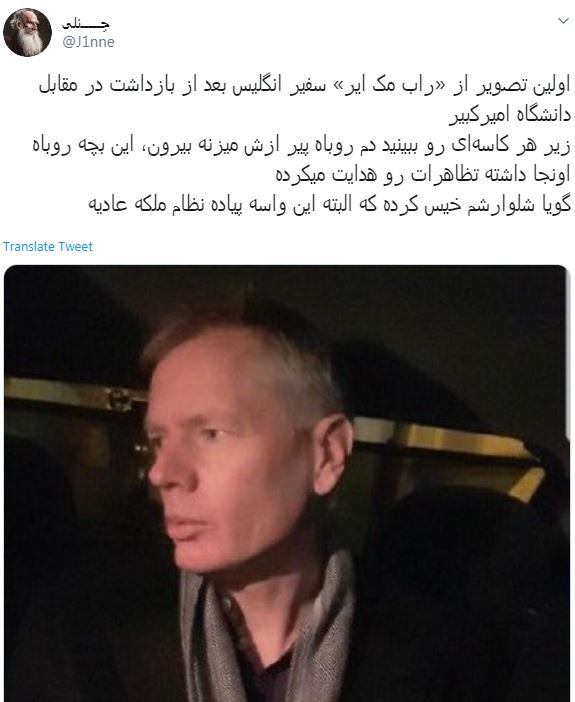
این سه خبر دو تحلیل به نظر مهم را به دست میدهد:
اول اینکه افکار عمومی و رسانهها دو چیز نیست! یکی افراد تحت فرمان سرداران گرانقدر و محترم ستاد کل نیروهای مسلح و دوم مردم و رسانههای دهه ۶۰. افراد تحت فرمان این گرانمایگان نیستند، پس باید آنها را قانع نمود و از قضا نباید آنها را منتظر گذاشت و انتظار سکوت و لبخند را داشت. و دیگر اینکه رسانهها و مردم حال حاضر ایران، رسانهها و مردم دهه ۶۰ نیستند، یعنی بخاطر اینکه گذشتهتان را و رفاه و جوانیتان را فدای انقلاب و نظام و امنیت همین مردم کردهاید، دلیل نمیشود تا چشم روی نگفتن حقیقت ببندند و به نظر حقیر این قسمت داستان، کاملا نشان میدهد که بزرگان عرصه امنیت و سرداران عزیزو گرانقدر کشور ما، به جد نیازمند مشاوران رسانهشناس هستند و خصوصا متخصین علوم ارتباطات اجتماعی در این فضاها و رویدادها میتوانستند این عزیزان را یاری دهند که تاخیر در واگویی حقیقت در کشوری که در حال شنا خلاف جریان آب در دنیاست و یک سرفه ضد نظام اسلامی تیتر اول رسانههای مرجع دنیاست، جه تبعات وخیمی را به دنبال خواهد داشت؟!
دوم اینکه آنچه رویدادها نشان میدهد، چامعه ما به سمت دو قطبی شدن پیش نمیرود و دو قطبی شده است، چرا که هر حادثهای که به منافع و مصلحت نظام مدد میرساند با حضور بسیار گسترده مردم همراه میشود و هر رویداد دیگری که جنبهای علیه نظام دارد با تجمعات (هرچند بسیار کمتر از طرفداران نظام اسلامی) روبرو میشود و این نشانه بسیار متقنی در خصوص دو قطبی شدن است.
قصد نتیجه گیری ندارم چرا که بسیار خود را کوچکتر از آن میدانم که توصیهای برای کهنه سربازان وطنم داشته باشم، اما همچون برادری کوچک و هم فکری کم سن و سالتر فکر میکنم که اگر به تبعات رسانهای موضوع فکر میشد، این فتحالفتوح کم رنگ نمی شد و چه بسا اگر در سال ۸۸ هم این رویدادها با تفکر بیشتری (از منظر رسانهای) تحلیل و بررسی میشد، چه بسا کام شیرین ایرانیان در جشن بلوغ ملت در خرداد همان سال که رفته رفته داشت احترام و همکاری دشمنان را نیز بر می انگیخت، بواسطه یک حماقت به دومینوی تحریمها ختم نمیشد.
همین
یا حق
تختی شما و تختی ما
سلام
یکی دو سالی هست که رسانهها هرازگاهی به احوالات تختی سرکی میکشند و
از بالا و پایین زندگی جوانمردانه تختی برای خودشون برج و بارو درست میکنند.
نکتهای که بنده میخوام در این سطور عرض کنم، نیازمند دو مقدمه هست:
اول. اونچه که در تاریخ شفاهی مردم ایران یا بهتر بگم تهران، تختی رو اذهان
تختی کرده، مدالهای تختی نبود، به پارک و دریا رفتنش نبود، زندگی فرزندش در
ینگه دنیا هم نبود یا بهتر بگم شباهتش به دیگران نبود؛ اونچه که تختی رو در نظر
مردم دروازه غار جنوب تهران و بعدها کل ایران، تختی کرده بود، تفاوتش با بقیه بود.
تختی عضو جبهه ملی شد، توی نهضت ملی کردن نفت دخالت کرد، گذاشت روی
پیشونی خودش مارک مصدقی بچسبونن، دلیل همه اینها یه چیز بود؛ میدونست
این شاه و شاه بازیها فایده نداره. برای خودش هم دو تا دلیل داشت، یکی اینکه نوه
حاج قلی یخچالدار بود که رضاخان راه آهن رو دقیقا از وسط زمینای اونا گذرونده بود و
دومی هم اینکه بچه دروازه غار بود نه اقدسیه و به چشمش دیده بود که شاه و
اعوان و انصارش وسط تهران داره چه کارایی که نمیکنه و اگه نمیشه اعتراض کرد،
حداقل نباید حمایت کرد.
دوم. اونچه که بنده از رسانه میدونم (که خوب رشته تحصیلی بنده هست) اینه که
وقتی چند تا سیاست رسانهای رو کنار هم میبینی که به یه سمت و سو در حرکت
هستند، باید دنبال نیت پشت پرده این حرکت بود.

دو سه سالی هست که از پسر تختی، دوست تختی، هم محلی تختی، هم بازی
تختی، رفیق تختی، تا حریف تمرینی تختی رو توی رسانههای خارجی و داخلی
پشت هم ردیف میکنن و دائم میگن تختی سیاسی نبود؟!!!
نبود؟!!!
پس چه کسی عضو جبهه ملی شد؟ چه کسی رو بهش می گفتن مصدقی؟ اسناد
ساواک مگه نقشه قتل تختی رو نکشیده بودن؟ دلیل نقشه قتل تختی توسط ساواک
هم حتما نحوه اصلاح موی سر تختی بوده ؟
و دست آخر هم اینکه تختی، تختی شد چون به امیرالمومنین (ع) اقتدا میکرد و
مرام پوریای ولی رو دنبال می کرد و پیرو امیرالمومنین(ع) ظلم رو بر نمیتابه. تختی
حتی مصدق رو هم بخاطر اینکه یه جایی هم مسیر بودن انتخاب کرد؛ نه اینکه مصدق
رو قبول کنه. تختی فقط یه مقتدا داشت و خودش هم بارها گفته بود.
حالا هرچه میتونید علیه تختی سیاسی بنویسید و قلم بزنید و مصاحبه بگیرید.
همین
یا علی
کمی سقراط
یونان کلاسیک به دوره ای گفته میشه که تمامیت یونان تحت سیطره هخامنشیان
بود؛ دوره ای 200 ساله که از 600 سال قبل از میلاد مسیح شروع میشه. گفته شده
این دوره ژرف ساخت های تمدن غرب رو شکل داده! من نمی دونم واقعا اینطور
هست یا نه ولی شما از فیلسوفان شروع کن تا ریاضی دانان و معماران و دانشمندان
علوم مختلف همگی یه تمجید و تفقدی برای این دوره داشتند. همه اینها درسته اما
منظور اصلی مورخین از ژرف ساخت دقیقا فرهنگ بوده. یعنی فرهنگ امروز غرب
حاصل بذرهایی بوده که در حکومت های محلی تحت نظر هخامنشیان در فاصله بین
2600 تا 2400 سال قبل بوده!

سقراط در همین دوره زیست کرده. انسانی خوش فکر و البته دارای هفت جان! که
اصلا با نوشتن میونه خوبی نداشته و هنرش در نحوه انتقال ذهنیاتش به زبانش بوده.
چرا میگم هفت تا جون داشته؟ نه توهین نکردم. به دو دلیل: اول اینکه در جوونی
عضو پیاده نظام شهرش میشه و هم رزم هاش از قدرتش در برابر گرسنگی و سرما یا
ازش به شدت تعریف کردن و یا با دیده حسادت بهش نگریستن! (رجوع کنید به جنگ
های پلوپونز لغت نامه دهخدا و تاریخ تمدن ویل دورانت)
اونچه از سقراط نوشته شده (با توجه به اینکه هیچ چیزی رو بر روی کاغذ نیاورده) 5
تا شاگردش به انسان های بعدی هدیه دادن. گفته شده سقراط به شدت زشت رو
بوده و شاه بیت این چهره لکه روی دماغ بزرگ و پهن بوده.
سقراط خدایان آتن را اوایل در خفا و بعدها اشکارا مسخره می کرد. در جلسه
محاکمه اش هم باورش را تنها به خدای یگانه می داند و جمله معروفش «دانم که
ندانم» ندانستن را جهل نه در برابر انسان های همسان خود که جهل در برابر دانایی
خداوند یگانه می پندارد. البته خدا را هم راحت نمی پذیرد. سقراط در مقابل اثیفرون
می نشیند و می پرسد که «آیا پارسایی، به این دلیل نیکوست که خدا او را دوست
دارد یا خدا پارسایی را دوست دارد چون پارسایی نیکوست؟»
سقراط در چند کلمه نمی گنجد .
نه ، دوستان . این متن مشوش نیست. متن های درباره سقراط، همواره تشویش
دارد. این تشویش در بین مورخان به مساله سقراطی معروف است.
روش سقراط اما داستان خودش را دارد. سقراط در روش خود چنان استادانه سوالات
بسیاری پشت هم به مخاطب ارائه می دهد و او را مبهوت به سرمنزلی که می
خواهد می برد. سقراط خالق سوال نیست اما معنای نتیجه گیری با سوال است.
اینهمه نوشتم و نتوانستم بر تشویش سقراطی غلبه کنم.
گویی هرکسی درباره سقراط می نویسد باید در آخرش دست نوشته اش به جمله معروفش اعتراف کند.
دانم که ندانم
همین
یا علی
سر حوض
آمدم بر سر حوض
تا ببینم شاید عکس تنهایی خود را در آب ............
سلام و ادب و احترام
مراد من امام سوم شیعیان، امام حسین علیه السلام می فرماید:
گريستن چشمها و ترسيدن قلبها، رحمتى از جانب خداست.

امیدوارم این رحمت الاهی شامل حال همه شما شده باشه؛ چه اونها که قدم بر
آستان یار گذاشتند و حق ادب رو در کربلا بجا آوردند و چه اونها که تنشان جا ماند؛ اما
دلشان دائم بین الحرمین بود.
اومدیم که بمانیم.
دعا کنید البته اگه قابل باشم.
همین
یا علی
انواع دانشمند
بعد یه مدت مدیدی سلام
چند وقتی خدمتتون نبودم. از دوستان بزرگواری که با انواع وسایل ارتباطی جویای احوال بنده بودن متشکرم. به امید خدا ازین به بعد به صورت مستمر در خدمتتون خواهم بود.
متن زیر رو سال 86 نوشتم یعنی یه چیزی حدود .... بذار ببینم ........اممممممممممممم ..... ده سال پیش ...... وقتی داشتم گنجه های وبلاگ رو گردگیری می کردم چشمم بهش خورد............ احساس کردم به داستان امروز جامعه ما خیلی شباهت داره........... بخونین و نظرتون رو بدین...... ممنون.
دوستان ما چهار نوع دانشمند داریم :
دسته اول مورچه هان. مورچه فقط جمع می کنه ؛ عاشق جمع کردنه . به قول خودشون حتی باید صفحه هم حفظ بشه . جمع کن حفظ کن جمع کن حفظ کن و جمع کن و باز هم حفظ کن . البته این دسته جزو دانشمندان و عالمان مفید به حال علمند چون علم قدما رو سینه به سینه به جددا می رسونن.
دسته دوم عنکبوت هان. عنکبوت ها یه مقدار جزیی می خورن و هزاران متر می بافن . اینها هم دو روز می خونن وساعتها در اون مورد صحبت می کنن و قلمشون رو می فرساین.هفته دوم ترم اول روانشناسین و توی محله شون باید بهشون گفت دکتر! مطبشونم که قبل از انتخاب واحد افتتاح کردن البته تابلو که نمی خواد همین طوری بیان خونه! هنوز سر از . . . . در نیاوردن میان اینجا توی وبلاگ ارشاد بازی راه میندازن( لو رفتم!) البته با وجودی که این افراد فایده ای به حال علم ندارن اما خوب جای شکرش باقیه که ضرر هم ندارن.
دسته سوم کلاغ هان. کلاغ ها سارقن و دو جور عمل می کنن یه سری یه گوشه منتظر میشینن ببینن چی رو زمین مونده به سرعت میان و به نام خودشون می زنن و دسته دوم که روششون رو تصحیح کردن خیلی راحت کتب اونوریا رو ترجمه می کنن بعدشم خیلی ریلکس اسم خودشون رو به عنوان نویسنده می نویسن ؛مثل دکتر ع. س( با عین.صاد اشتباه نشه)راستی یادمون باشه که اگه از کسی چیزی توی وبلاگمون نوشتیم و رفرنس ندادیم دقیقا کار همین دسته رو داریم ادامه می دیم .
دسته چهارم زنبور هان. زنبور در پهنه دنیا گردش می کنه نظاره می کنه زیباترین شی عالم یعنی گل رو انتخاب می کنه و بهترین قسمتش رو جدا می کنه و به لانه اش میبره اونجا اون رو پردازش می کنه و دست آخر محصولی به ما میده که با مواد اولیه اش به کلی متفاوته. دانشمندان این دسته هم در تمامی دنیا می گردن بهترین سخنا ن و نظریات رو انتخاب می کنن، اندیشه هاشون رو گلچین می کنن در ذهن خودشون اونها رو پردازش می کنن و شاید سالها روی یک موضوع فکر می کنن و سپس نتیجه و علمی رو به بشر ارائه می دن که انسانیت انسا ن رو معنا می بخشه. کلام کوتاه منتظر نظرات زیبای شما هستم .
اگه از طريق لينك وارد شديد و فقط همين پست براتون باز شده صفحه نخست رو كليك كنيد تا بقيه پستهارو هم ببينيد.
همین + نوشته شده در دوشنبه پانزدهم مرداد ۱۳۸۶ساعت ۱۲:۱۹ ب.ظ
بی مقدمه
تا یادم نرفته سلام
شاید تمام باغبونها دور باغ خودشون رو حصار و پرچین کشیدن و هیچ کسی اونها رو بابت این کارشون سرزنش نمی کنه ؛ چرا که کمتر باغ بی حصاریه که برای صاحبش میوه و محصول به جا بذاره.
هیچ کسی با نام و بهانه آزادی دیوار خونه خودش رو بر نمی داره و حتی شبها در حیاط خونش رو باز نمیذاره . هیچ صاحب گوهری هم ، زیور آلات خودش رو بی حفاظ، در معرض دید رهگذران قرار نمی ده تا بدرخشه و جلوه کنه و چشم و دل اونها رو محصور کنه ؛ دلیل این دو تا مورد بالا رو هم خودتون بگردید پیدا کنید.
اگه در شیشه هر عطری رو نبندی ، شمیم دل نواز عطرش از بین می ره .اگه در مقابل پنجره ات توری نزنی، از نیش پشه ها در امان نخواهی بود .
وقتی راه ورود پشه ها رو می بندی، در حقیقت با ایجاد یک "حدود" در حوالی خودت؛ خودت رو " مصون "میکنی ، نه "محدود".در ودیوار هر خونه ای یک پناه محسوب میشه نه قید و بند (البته اگه از کج فهمی ها بگذریم)
قرآن میگه:{ زنان خود آرایی و خود نمایی و عشوه گری نکنند ، تا مورد آزار و اذیت بیمار دلان قرار نگیرند}اگه برای همین مصون موندن خودت رو پوشوندی دیگه ذهنت به تو خرده نمی گیره و اگر هم کسی خرده گرفت سخن بی منطق و از روی نا آگاهی ارزشی نداره.
حجاب اومده که زن در جامعه حضور داشته باشه و گرنه در خلوت که حجاب معنا نداره.
زن بخاطر ارزش و کرامتی که داره ، باید محفوظ بمونه و خودش رو حراج نکنه و در بازار سودا گران شهوت به ظاهر . . .
سبد کالا وندی شرمن و یک اشاره
پیام های خاصی که خیلی خیلی خطرناکتر از اشکالات واضح طرح بودند و هستند و مثلاً اینگونه در صحبت های خانم وندی شرمن، معاون وزیر خارجه آمریکا تبلور یافتند که اخیراً در سنای آمریکا گفت:
"شما در اخبار دیدید که ایران اخیراً به طور قابل مشاهدهای غذا به مردم فقیر در جامعه داد که به نوعی نشاندهنده این است که کاهش هدفمند و محدود تحریمها تاثیر مستقیم بر مردم این کشور داشته است، همانطور که روحانی قول داده بود که این پول صرف اهداف دیگر نشود"

و البته می گذرم از اینکه عدهای در رسانه ها فهم درستی از نحوه اطلاع رسانی صحیح ندارند و ایضاً صاحب تحلیل های غلطی هستند که یا پوشش اخبارشان آب به آسیاب دشمن می ریزد (که ریخت!) و یا اظهار نظرهایشان درباره رفتار مردم و توده جامعه ایرانی به هیچ وجه صحیح نیست و ملاک درستی ندارد.
من با تحلیل خانم وندی شرمن و آقای علی مطهری درباره نیازمند بودن مردم ایران، تمایل آنها به صف بستن، تأثیرگذاری تحریم ها، تأثیرگذار لغو محدود تحریم ها و جولان گسترده فقر در ایران مخالفم.
به این دلیل که اولاً تأثیر تحریم ها در اقتصاد ایران به گواه عقل و آمار منتشر شده بیش از 25 درصد نیست.
ثانیاً اقتصاددانان ایرانی قبل از لغو محدود تحریمها و اساساً قبل از شروع تئاتر مسخره تحریم ها، طرح توزیع کوپن غذایی و یا کالاهای اساسی را در میان قشرهای جامعه ارائه کرده بودند و طرح توزیع سبد کالا ربطی به تحریم ها ندارد. (رجوع شود به آرای دکتر احمد توکلی در سال 91)
و ثالثاً صف بستن برای غذا، برای خرید آیفون 5، برای باز شدن یک رستوران جدید، برای رأی دادن و برای هر چیز دیگری، نه تنها در ایران بلکه در تمام کشورهای دنیا یک رسم بشری محسوب می شود و نشانه هیچ چیز غیر از انضباط اجتماعی نیست. (حتی اگر داخل صف زد و خورد صورت بگیرد یا یکنفر سکته کند)
در آخر هم این عکس ها و توضیحات ذیل آنها را بعنوان فصل الخطاب ارائه می کنم تا خانم شرمن، آقای مطهری و طرفداران نظرات این دو نفر، تحلیل بهتری راجع به ماجرای توزیع خدمات رایگان توسط دولت و البته ماجرای "صف بستن"! درباره هرچیزی و در هرکجای دنیا داشته باشند و نتایج درستی در این باره بگیرند.
***

این تصویر، جوانان و خانواده های ایرانی را نشان می دهد که برای دیدن یک فیلم سینمایی صف بسته اند. قاعدتاً این تصویر بیانگر آن است که تصور خانم وندی شرمن و همچنین آقای مطهری از دلایل صف بستن ایرانی ها به بهانه هایی مثل تحریم ها و یا کالاهای رایگان، تصوّر صحیحی نیست.
***

این تصویر، مردم یکی از شهرهای اروپا را نشان می دهد که برای خریدن آیفون 5 صف بسته اند. صف بستن امر مرسومی در دنیا محسوب می شود و هیچ تحلیلگر منصفی و حتی نامنصفی به خودش اجازه نمی دهد؛ حضور مردم در یک صف را به فقر و تحریم مربوط بداند!
***

این تصویر یک زن یونانی را نشان می دهد که در صف توزیع کالای رایگان در کشور یونان ایستاده و از خدمات رایگان عمومی کشورش استفاده می کند. تبعاً خانم شرمن و آقای مطهری این قضاوت را ندارند که یونان تحریم بوده یا فرهنگ مردم یونان، طوری است که اگر جارو هم توزیع رایگان داشته باشد؛ آنها برای داشتنش صف می کشند...
یونان هم مثل هر کشور دیگری در دنیا مشکلاتی دارد و مردمش از خدمات عمومی دولت نخست وزیر ساماراس استفاده کرده اند.
***

این تصویر که توسط رسانه های ایرانی منتشر شده، جوانان مشتاق ایرانی را نشان می دهد که در انتظار آغاز توزیع گوشی هوشمند ال جی 2 هستند. به نظر من، حرفهای خانم شرمن درباره فقر در ایران و اثرگذاری تحریمها! با واقعیت این تصویر هیچ تطابقی ندارد.
***

این تصویر، آلمانیها را نشان می دهد که برای بهره مندی از خدمات عمومی کشورشان که شامل غذا و لباس است در صف ایستاده اند. خانم شرمن با دیدن این عکسها هیچگاه نگفته و البته نخواهد گفت که آلمان یک کشور فقیر است...
***

این عکس مربوط به مردم ایرلند است و سایت ایریش میرور، آنرا مخابره کرده است. گویا آنها با مشکل کار مواجه هستند و در صف ایستاده اند تا یک مرکز کاریابی مشکل آنها را حل کند. در صف ایستادن و استفاده از خدمات عمومی در هیچ کشوری از دنیا نماد فقر و تحریم نیست.
***

این تصویر مربوط به یک مرکز توزیع غذای رایگان در انگلستان است. مردم برای استفاده از خدمات این مرکز باید در صف بایستند. انگلستان تحریم نیست...
***

این تصویر مردم ایران را نشان می دهد که برای بهره مندی از طرح عمومی دولت در ارائه سبد رایگان کالا، در صف ایستاده اند.
***

این افراد، استرالیایی هایی هستند که در صف توزیع خدمات رایگان یک مرکز عمومی ایستاده اند. قاعدتاً خانم شرمن و آقای مطهری می دانند که کشور استرالیا نه تحریم است و نه برخی از چهره های دولتی و پارلمانی اش معتقدند که مردم استرالیا برای توزیع جارو! یا مرگ موش در صف می ایستند!
***

این مردم ایران هستند که در یکی از خیابان های تهران در انتظار توزیع گوشی های گلکسی نوت 2 سامسونگ هستند. این در حالی است که خانم شرمن مدعی تأثیرگذاری گسترده تحریمها و فقر عمده مردم در ایران است!
***

این عکس که از یک گزارش تصویری اخذ شده، مردم یکی از شهرهای استان قشنگ فارس را نشان می دهد که در یکی از انتخاباتها، برای انداختن رأی خود، در صف ایستاده اند. ایرانی ها مثل مردم همه دنیا، برای کارهای مختلفی در صف می ایستند. ضمن اینکه تئاتر تحریم ها نیز میزان حمایت سیاسی آنها از حاکمیت جمهوری اسلامی ایران را افزایش داده است.
***

صف بستن گاهی ممکن است برای اعتراض به مدیریت بد بانک های یک کشور صورت بگیرد. این تصویر متعلق به بحران مالی چند سال قبل بانک های کشور قبرس است که در پیامد آن مردم این کشور با ازدحام در مقابل بانکها تلاش کردند تا حساب های پس انداز خود را خالی کنند. خانم شرمن در آن مقطع مدعی نشد که کشور قبرس با فقر شدید مواجه است!
***

گویا مردم فرانسه هم گاهی در مقابل فروشگاه های مواد غذایی صف می بندند. قابل توجه خانم شرمن اینکه مثل محتوای همین عکس؛ در تهران هم رستوران ها و کافی شاپ های زیادی وجود دارد که هرگاه قصد کنید وارد آنها بشوید؛ اول باید چند ساعتی را در صف بایستید تا نوبت شما برسد.
آنها جای خالی ندارند.
***

فکر می کنم بهتر است خانم شرمن به جای تحلیل غلط وضعیت اقتصادی ایران و مردم ایران؛ فکری به حال اوضاع رو به سقوط کشور خودش بکند.
این تصویر که سایت انگلیسی دیلی میل آنرا منتشر کرده است؛ یکی از 49 میلیون مادر تنها و بی خانمان آمریکایی را نشان می دهد که در کنار یکی از پیاده روهای خیابان های آمریکا نشسته و بر روی تابلوی خود نوشته است: "فقط یک شغل. من یک مادر تنها هستم. لطفاً کمک کنید. متشکرم. خدا به شما خیر بدهد."
و البته امیدوارم خانم شرمن بعد از آنکه فکری به حال پدیده مادران تنهای بی خانمان در آمریکا کردند؛ سپس فکری هم به حال 47 میلیون آمریکایی استفاده کننده از کوپن غذا بکنند و بعد هم فکری به حال بیکارهایی که هم اکنون در کانالهای فاضلاب آمریکا زندگی می کنند و بعد هم فکری به حال تحلیلهای غلط خودشان و سایر مقامات آمریکایی از وضعیت جمهوری اسلامی ایران در ابعاد سیاسی، اقتصادی و فرهنگی که ممکن است تبعات جبران ناپذیری را برای دولت آمریکا به همراه داشته باشد...
خانم شرمن حتماً فراموش نکرده اگر این روزها قیمت سوخت در کشورش افزایش نیافته و یا در راهروی وزارت خارجه آمریکا از سرما خبری نیست؛ فقط و فقط به خاطر این است که تنگه هرمز بعنوان شاهراه 80 درصد انرژی فسیلی جهان، هنوز باز است.
منبع:مسعود یارضوی؛ وبلاگ "عبور"
تصویری از عمق تاریخ . . .
عکس بسیار عجیبی است.
روی این تصویر میشه اسامی مختلفی گذاشت و البته میشه از زوایای مختلفی اون رو مورد ارزیابی قرار داد.
پادشاه ایران در مأوای یک روستایی و در کنار خانواده او نشسته است.
نبود مادر رو هم احتمالا باید به حساب سر زا رفتن مادر گذاشت.امکانات حداقلی در شهرها هم به طور عادی وجود نداشت؛ روستا که جای خود داشت.
اما اونچه که توی این عکس خیلی دقیق به عمق دو فرهنگ اشاره داره؛ توجه منو جلب کرده.
توجه من به قاب های عکس خط نیفتاده روی طاقچه روستایی که تصویر شاهنشاه در اون خودنمایی می کنه نیست؛ به نوع نشستن روستایی هم نیست. نگاه غریبانه دخترک و ترس پسرک هم با اینکه یک نوستالژی تاریخی رو به نظاره نشسته هم مطلب مورد نظرم رو منعکس نمی کنه.

نگاه من دقیقا روی کفشای آریامهر و همسردورگه ایشونه.
فرشی که روستایی هر روز سه مرتبه صبح و ظهر و مغرب بر روی اون به عرش میره اینک نیاز به تمیز شدن داره و شاهنشاه ما که بخاطر عوام فریبی مجبور شده لحظاتی رو کنارشون باشه و از ترس اینکه نکنه خدایی ناکرده سندروم غربتی بودن او رو نگیره خودشو مثل پسرک سرمازده ای جمع کرده این رو نه می دونه و نه متوجه میشه.
و این همون تفاوت فرهنگ هاست و اینجا فرهنگ ها فرسنگ ها از هم دورند به دوری نگاه دخترک روستایی و شاهنشاه ما که هرچند هر دو به یکجا خیره اند اما ...
نظرات طبق معمول تایید نمیشن
تا بعد
معروف است . . .
معروف است که یک بار اینشتین در امریکا با قطار در حال مسافرت بوده که مامور قطار برای دیدن بلیط سر می رسد اما اینشتین هر چه که می گردد بلیط را پیدا نمی کند. مامور که این وضع را می بیند از کوپه او دور می شود در حالی که می گوید "حضرت استاد ، کیست که شما را نشناسد و یا شک کند شما بلیط نگرفته اید. نیازی به نشان دادن بلیط نیست". اینشتین سری به نشانه تشکر تکان می دهد.
مامور بعد از تمام کردن کوپه های دیگر این واگن ، نگاهی به عقب می اندازد اما متوجه می شود اینشتین همچنان در حال گشتن است. برمی گردد و می گوید : "پروفسور اینشتین ، گفتم که شما را می شناسم و نیازی به بلیط نیست ، چرا بازهم نگرانید؟" اینشتین جواب می دهد : "اینهائی که گفتی خودم هم می دانم ، دنبال بلیط هستم ببینم به کجا دارم می روم"
از چه وقت ایران ایران شد
به گزارش تاریخ ایرانی، تا اوایل قرن بیستم، مردم جهان کشور ما را با عنوان رسمی پارس یا پرشین میشناختند اما در دوران سلطنت رضاشاه که بحث رجعت به ایران باستان و تاکید بر ایران پیش از اسلام قوت گرفته بود، حلقهای از روشنفکران باستانگرا مانند سعید نفیسی، محمدعلی فروغی و سیدحسن تقیزاده در حکومت پهلوی اول با حمایت مستقیم رضاشاه گردهم آمدند که به این منظور اقداماتی را انجام دادند.
سعید نفیسی از مشاوران نزدیک رضاشاه به وی پیشنهاد کرد نام کشور رسما به «ایران» تغییر یابد. این پیشنهاد در دیماه ۱۳۱۳ شمسی رنگ واقعیت به خود گرفت. این تصمیم بعد از ۷۶ سال هنوز هم محل مناقشه است. مخالفان این تغییر معتقدند که ایران نمیتواند آن بار معنایی، فرهنگی و تمدنیای را که در اصطلاح «پرشیا» نهفته است و غیر ایرانیان از دیرباز با آن آشنایی دارند، منتقل کند.
گروهی معتقدند که رضاشاه فقط به دلیل سیاسی برای تثبیت حکومت اقتدارگرایانه خود چنین تصمیمی گرفته است. این دسته از تحلیلگران میگویند اصل اقدام را باید متوجه جمعی از نخبگان فرهنگی و سیاسی آن دوره از جمله افراد ذکرشده دانست که در اقتدار حکومت رضاخانی منافع خاص خود را نیز جستجو میکردند.
تعبیر خواب ها همچون برفی که بارید
این شعر رو در پاسخ شعری که یکی از دوستان بر روی خروجی وبلاگشون گذاشته بودن بالبداهه گفتم و گفتم شاید با انتشارش در وبلاگ کمی از غبار کهنگی مطلب قبل زدوده بشه
می دونم اونطور که باید و شاید زیبا نیست
اما خوب چه میشه کرد بضاعتنا هذا
اما بعد؛
خواب ها تعبیر شده
آرزوها بر آورده شده
و دعاها مستجاب
سختی ها هم مدتی است آسان شده
و سیاهی ها سپید سپید
همچون برفی که بارید
اما دعای من
در گلویم مانده
و بغض هنوز در گلویم ساکن
و در فکر تمدید مهلت
و باز هم می گویم
در پس هر نیایشم
اللهم عجل لولیک الفرج

و فرج تعبیر خوابهاست
و استجابت دعاها
و بر آورده شدن آرزوها
و شیرینی تلخکامی ها
و درمان دردها
و سفید کننده سیاهی ها
آنگاه که در کنار سنگی سیاه
می سراید او
منم مهدی فاطمه
همین
نظرات تایید نمی شود طبق معمول
جربزه و طلب حوائج
با یه کوله بار پر منتها پر از گناه ، می رم داخل مسجد، اینقدر این کوله سنگینه که پاهام داره زیرش طاقتش رو از دست میده.
مردم دارن گریه می کنن، به هر جون کندنی شده می خوام یه جایی اون گوشه کنار برای خودم دست و پا کنم ...طبق معمول پیدا نمی کنم ...سرمو می گیرم بالا و می گم خدایا تو که می دونی ما جربزه یه جا پیدا کردنم نداریم حالا چرا هی به رخم می کشی ؟! توی همین به قول رفقا اتصال حس می کنم یکی آروم دست گذاشت روی زانوم ، عرش رو بی خیال می شم و نگاهم رو می اندازم به فرش ، خدا رو شکر یکی از بچه ها ما رو شناخت ؛ یه تکونی به خودش داد تا واسه منم جا درست کنه، منم یه تشکراز خدا (الحمدلله و شکرا له)می کنم و خودمو می چپونم بین خلا ایجاد شده
مستقیم سرمو می برم بین زانو هام ؛ هنوز وسط روضه است ، گریم می گیره نمی دونم به حال زار خودم گریه کنم ، از اوضاع جامعه بنالم یا برای اربابم و مصیبتای روز عاشورا ؟مگه میشه زیر این همه بار گناه باشی و بدونی و بخوای شیعه باشی و گریت نگیره ؟خوب می دونم که اگه اینور گریه نکنم و وسط گریه عهد توبه رو با خدا نبندم ، اونور بد فرم گریمو در میآرن و اگه اینور ازین راه های میونبر استفاده نکنم، اونور................
بگذریم
دوستان ، این چند خط بالا رو نوشتم که یه چیزی رو خدمتتون عرض کنم ؛
اونم این نکته است که فکر نکنید گریه و زاری توی عزای امام حسین علیه الصلاه و السلام و ایام محرم با بقیه مراسما یکیه ( البته می دونم که اکثرتون المنه لله در این زمینه استادید اما خوب بعضی از دوستان یه سری سوالات در این زمینه کرده بودن که.....)خدا چند تا چیز رو راه میونبر بخشش و بخشایش قرار داده و یکی از مهمترین و محبوبترین راهها برای طلب حوائج و بخشوده شدن گناهان همین گریه بر حسین علیه السلام و عزاداری و یاد آوری شهادت سالار شهیدان و یاران مروارید گون و با وفاشه .البته ذکر این مطلب خیلی ضروری به نظر می رسه که هر چقدر این عزاداری آگاهانه تر و با معرفت بیشتری باشه هم ثوابش بیشتره و هم اثری که روی اعمال ما داره وسیعتر و ماندگارتره.
گریه یک مرد
ستارخان نوشته بود:
من هیچ وقت گریه نمیکنم چون اگه اشک میریختم آذربایجان شکست میخورد و اگر آذربایجان شکست میخورد ایران زمین میخورد...اما تو مشروطه دو بار اون هم تو یه روزاشك ريختم.حدود 9 ماه بود تحت فشار بودیم..بدون غذا.. بدون لباس..
از قرار گاه اومدم بیرون...چشمم به یک زن افتاد با یه بچه تو بغلش.. دیدم که بچه از بغل مادرش اومد پایین و چهار دست پا رفت به طرف بوته علف...علف رو از ریشه درآورد و از شدت گرسنگی شروع کرد خاک ریشه ها رو خوردن...
با خودم گفتم آلان مادر اون بچه به من فحش میده و میگه لعنت به ستارخان که مارو به این روز انداخته...
اما... مادر کودک اومد طرفش و بچش رو بغل کرد و گفت : عیبی نداره فرزندم...خاک میخوریم اما خاک نمیدهیم...اونجا بود که اشکم در اومد
بالاخره پیدایش کردم
کجاوه ها (باربند شتر) را روی هم می چینم
مثلا آمده ایم حج !
خدایا!برای همه رسول فرستاده ای ،برای ما هم رسول فرستادی؛ موسی از میان دریا برای امتش راه درست می کند،عیسی کور های قومش را شفا می دهد؛آن وقت رسول الله می گوید وسط بیابان خم آنهم در این گرمای طاقت فرسا پیاده شوید کجاوه های شترانتان را روی هم بچینید!چه می دانم؟اگر از این عقل ها داشتیم که رسول خدا می شدیم!بهتر است سخن فرستاده خدایم را سریعتر انجام دهم........
بقیه مطلب رو در ادامه مطلب بخونید
همین
یا حق
نقد جامعه شناسانه اقتصاد شاهنشاهی در دهه 40 و 50
سالهای واپسین دهه ۴۰ اوج افتخار و اقتدار شاه بود.
اقتصاد کشور به شکوفایی رسیده بود و در سایه این شکوفایی، صنایع کوچک و بزرگ زیادی ایجاد شد. چرخ اقتصاد میچرخید و به خیل عظیمی از مردم، نان و رفاه هدیه میداد. تورم به شکل حیرتآوری پایین بود اما در مقابل، رشد اقتصادی ایران برای سالهای طولانی در دنیا نظیر نداشت.
اما؛

دو عارضه باعث شد نوار کامیابیهای محمدرضا پهلوی قطع شود و حتی در سرنگونیاش نقش عمده داشته باشد؛
اولی عارضه دیکتاتوری و خودمحوری شاه بود که پس از دهه ۴۰ همچون غدهای رو به بزرگی نهاد و دیگری عارضه افزایش درآمدهای نفتی بود که همچون سرطان به جان اقتصاد ایران افتاد. شاه از آنجا که در اوایل دهه ۵۰ دچار غرور و خودبزرگبینی مفرط شده بود، گوشهایش را بست و به حرف هیچ دلسوزی گوش نداد. در مورد عارضه خودمحوری و دیکتاتوری شاه، کنشگران سیاسی زیاد هشدار دادند اما او بیتوجهی کرد و فضا را بست و جوانان زیادی را به زندان انداخت. وقتی چنین جوی در سیاست ایجاد شد، شاه سعی کرد حساب مردم را از روشنفکران ناراضی جدا کند بنابراین تصمیم گرفت برخلاف قانون برنامه و برخلاف نظر کارشناسان و اقتصاددانان، درآمدهای نفتی را به اقتصاد تزریق کند. شاه قصد داشت با تزریق درآمدهای نفتی به اقتصاد کشور، روند توسعه را سرعت ببخشد اما غافل بود که چنین رویهای میتواند عواقب اقتصادی و سیاسی زیادی داشته باشد. به هر حال از ابتدای دهه ۵۰ درآمدهای نفتی ایران بیشتر شد و در سال ۱۳۵۲ به اوج رسید. شاه به حرف کارشناسان گوش نداد و این پول را به اقتصاد تزریق کرد. این پول تورم ایجاد کرد. در کوتاهمدت، رضایت خاطر نسبی در مورد فراوانی کالاهای وارداتی به وجود آمد و به قول دکتر علینقی عالیخانی، مردم رفتهرفته داشتند به هیبت شیخهای عرب در میآمدند. مصرفگرایی و تشدید واردات باعث بالا رفتن رضایت مردم در کوتاهمدت شد اما این سیاستها رفتهرفته اثر خود را از دست داد و شاه با مردمی مواجه شد که خواستههای زیادی داشتند.
بقیه بحث رو در ادامه مطلب مشاهده بفرمایید.
نظرات تایید نمی شود
چند کلمه ای خودمانی با بچه حزب اللهی های تصمیم گیر!

در موارد قابل ملاحظه ای نقطه شروع خیلی از هنجارشکنی های فرهنگی به تعدادی حزب اللهی ساختار شکن می رسد. علتش نیز حاشیه امنی است که از حیث شرعی و حکومتی برای خود قائلند. یعنی حقی که برای دیگری قائل نیستند با توجیهاتی برای خود از شیر مادر حلال تر می دانند.
جامعه ای که به برچسب زدن بر افراد خو گرفته است طبیعی است که اقلیت متدین و دلسوز با برچسبی خانه نشین شوند و اکثریتی وابسته به قدرت به دلیل پشتوانه گرم ثروت و مکنت و ظاهر مذهبی و نداشتن برچسب ساختار شکنی کنند. بدتر اینکه نیروهای مقاوم و به اصطلاح کفن پوشی مقابل این دست حزب اللهی های هنجار شکن وجود ندارند. تاریخ گواه است که این دست هنجار شکنی ها به سرعت تبدیل به نهاد شده است و ماندگار.
از اباحه ترین سیاست های فرهنگی كه در دولت احمدی نژاد كليد خورد و تقابل با مرجعیت تا حمایت از ترویج بدحجابی تا هنجار شكني ها و تابو شكني هاي به سبك فيلم سازي ده نمكي همه در همين راستا است.
متاسفانه بسیاری از ساختار شكني ها توسط برخی حزب اللهی ها صورت می گیرد و البته كه گام بعدي را ديگران بلندتر بر مي دارند. با نیت خیر تابو می شکنن و مسیر را برای دیگران مهیا می سازند تا با نیت شر ترویج اباحه گری کنند.
فرض کنید این پوستر فیلم برای فرهادی بود.

این دولت ما، دولت تدبیر و امید است

ما از دریچه دیگران
براندن، عکاس / بلاگر آمریکایی مدت هاست تحت عنوان Humans of New York روایت های تصویری / نوشتاری اش از زندگی مردم را منتشر میکند. او که در ماه دسامبر به ایران سفر کرد میگوید: "علیرغم هشدارهای دولت آمریکا برای سفر به ایران و به ویژه عکاسی در آنجا، من به ایران آمدم. کشوری زیبا با تاریخچه ای غنی و مردمانی مهمان نواز. آنها مردم آمریکا را به طور ویژه ای دوست دارند. به ما لبخند میزنند، برایمان دست تکان میدهند، به صرف غذا دعوتمان میکنند و میخواهند پیغام های شخصیشان را به جنیفر لوپز برسانیم. استفاده از تکنولوژی، موزیک ها و فیلم های آمریکایی در اینجا عمومیت دارد. در ایران هم مانند بقیه کشورها، مردم عقاید و دیدگاه های متفاوتی دارند اما اکثریتشان با احترام و حسن نیت با شما برخورد میکنند. تنها نکته تاسف آور، رابطه خصومت آمیز بین دولت های این دو کشور است. اخیرا به دلیل کاهش ارزش ریال، سفر به ایران نیز بسیار ارزان تمام میشود.”
*****************
در این قسمت نظر مردم آمریکا در مورد عکس های براندن که از ایرانیان گرفته است را می بینید.
برای مترجمم توضیح دادم که میخوام مردم عادی رو سوژه عکاسی ام قرار بدم. ولی فکر کنم اون منظورم رو دقیق متوجه نشد. یکی از خانم های جوان که در حال عبور بود رو نگه داشتم. مترجمم عجولانه به اون گفت که ایشون میخوان از واقعیت های جامعه عکسبرداری کنن. سپس اون خانم خندید و به فارسی یه چیزی گفت. از مترجمم پرسیدم چی گفت؟ اون گفته: البته واقعیت تلخ !
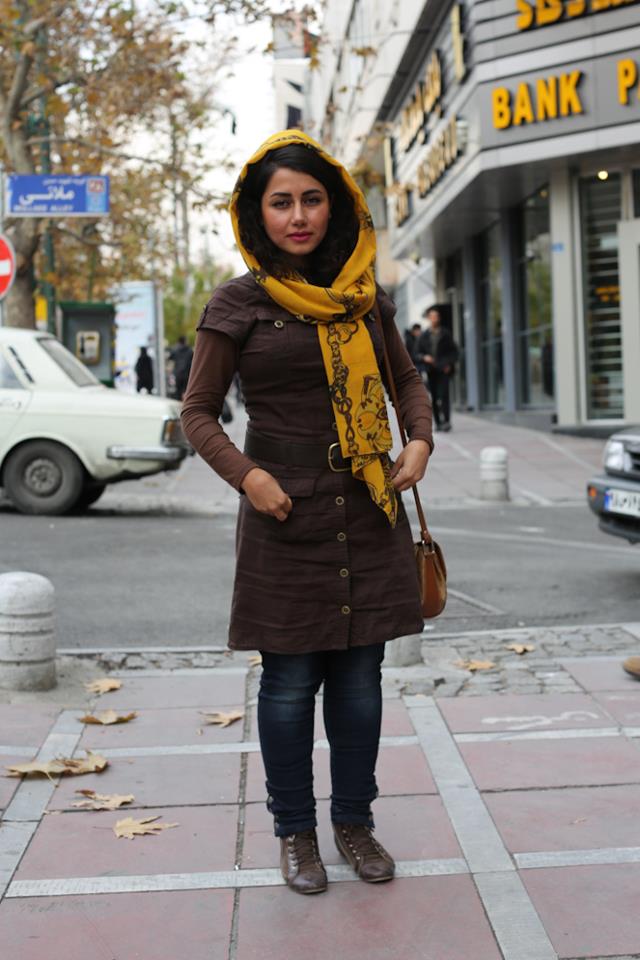
کن اسکارتر: آمریکایی ها الان دارن به خودشون میگن: چی؟ عمرا این یه شهروند ایرانی باشه! و احتمالا بیشترشون میگن: تهران تو کدوم یک از ایالت های آمریکاس؟
دوتا کامنتی که الان میزارم با نکوهش اکثر بازدیدکنندگان آمریکایی مواجه شدن که به اینا میگفتن شما باید آگاهیتون رو بالاتر ببرید!
یاکوب: احتمالا یکی دو هفته دیگه جسدش رو پیدا میکنن که به خاطر عدم رعایت حجاب به قتل رسیده
مالتر: عجیبه! مگه نباید موهاشون رو بپوشونن؟ موهای این که به وضوح مشخصه! امیدوارم یه موقع اسید رو صورتش نپاشن
ماریا: چه خانم باوقار و زیبایی
آماندا: متشکرم از خانم های تهرانی که اجازه دادید براندن ازتون عکس بندازه و برای ما منتشر کنه. اگر کامنت من رو میخونید میخوام بگم که کامنت های نفرت انگیز بعضی ها رو(که خلاف چیزی هست که اکثر ماها فکر میکنیم) نادیده بگیرید و افتخار کنید به اینکه باعث شدید چیزی هرچند کوچک به آگاهی ما اضافه بشه.
فیلیپ: من سال ۲۰۰۹ به ایران سفر کردم و عاشق این کشور شدم. اصفهان، شیراز و بقیه شهرهایی که رفتم رو واقعا دوست دارم. جذابترین قسمتش هم خوده مردم ایران بودن. در تمام سفرهایی که تا به حال داشته ام هرگز با اینچنین مهمان نوازی و صمیمیتی از طرف مردم مواجه نشده بودم.
*****************
اینها آتش نشانان ایستگاه ۶۴ شمال تهران هستن. وقتی فهمیدن من از نیویورک اومدم ازم پرسیدن تو هم یه آتش نشان هستی؟
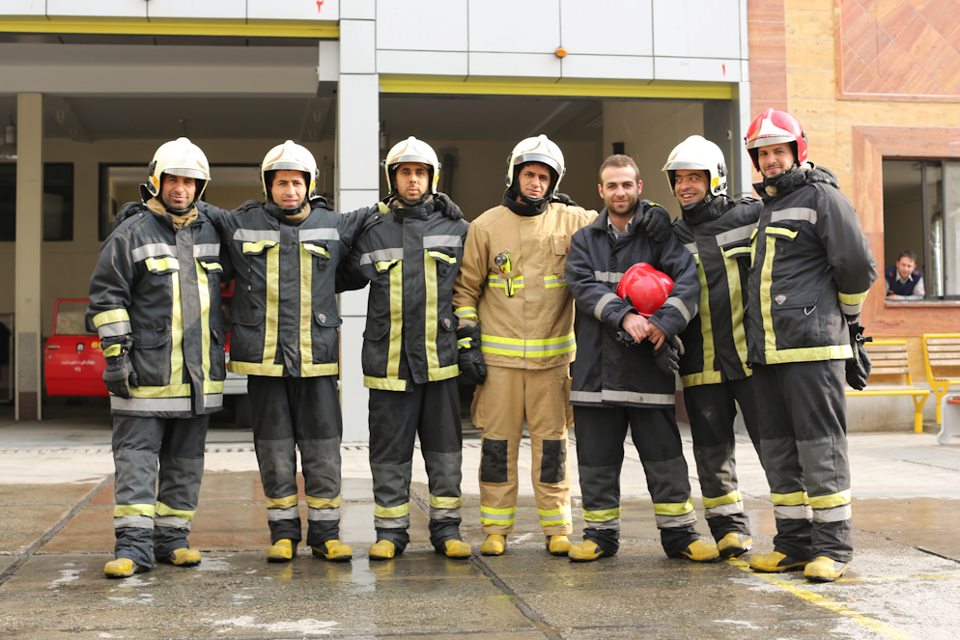
لنا: چرا آتشنشانا همیشه خوشتیپ به نظر میان؟
کدی مای: عکسات واقعا نظر منو نسبت به ایران عوض کرد. ازت ممنونم
جولی: من عاشق اون آقاهه هستم که داره زیرچشمی از پنجره نگاه میکنه
برایان: مادربزرگ من به عنوان مادری که یکی از پسرهاش رو در جنگ ویتنام از دست داد یه بار بهم گفت که معتقده اگر مردم فقط به چهره های دشمنان احتمالیشان نگاهی بیندازند و اینو درک کنن که اونا هم واقعا انسان هستن، تب جنگ ها فروکش میکنه. اون همچنین میگه اگر مادران زمامدار امور بودن هیچوقت هیچ جنگی اتفاق نمیفتاد.
سامانتا: چیزی که برام جالبه اینه که همه این عکس هایی که از ایران برامون آپلود کردی به نظر میان تو همین نیویورک گرفته شده باشن. واقعا جالب و زیبا هستن
**********************
وقتی ازشون خواستم یه عکس از اونا بندازم، لبخند زدن و جوابی ندادن. برداشتم این بود که اونا مایل به این کار نیستن. مترجمم گفت فکر کنم اونا موافق باشن. به خاطر تواضعشون جوابی ندادن. رفتاری که خیلی از ایرانی ها دارن. یه بار دیگه ازشون درخواست کنی قبول میکنن
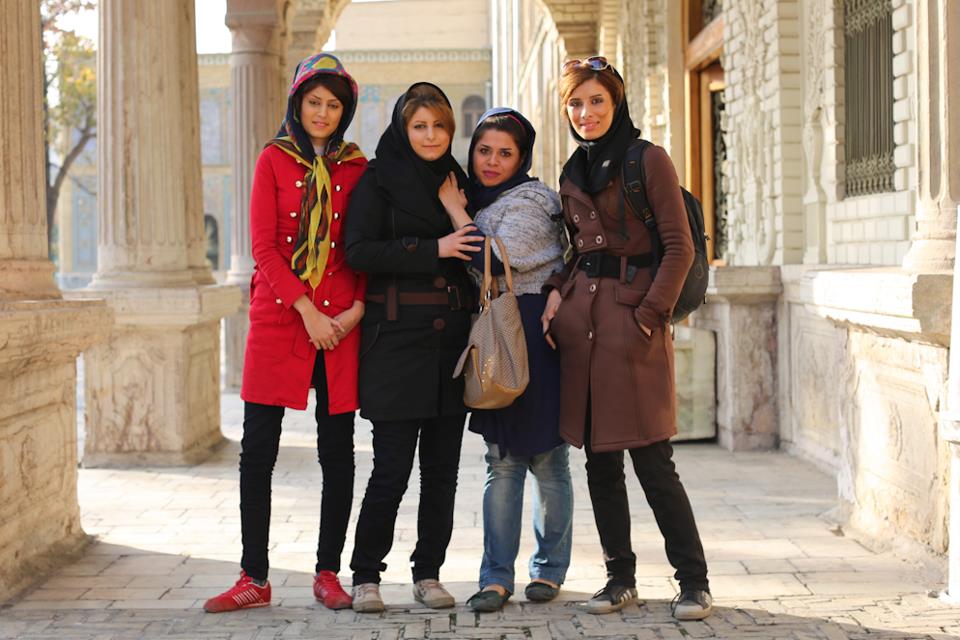
آدریانا: ایرانی ها مردم شگفت انگیزی هستن. من خیلی از ایرانی هایی که به آمریکا مهاجرت کردن رو میشناسم. اونا واقعا شهروندان فوق العاده ای هستن.
شانون: فکر کنم اسم این سنت ایرانی ها "تعارف” باشه. امیدوارم درست نوشته باشم. شما سه بار یه چیزی رو میخواید یا میپرسید. اگر در بار سوم اون شخص همچنان بگه نه، این یعنی واقعا نه. دو بار اول اگر بگن نه این نشونه ادب و تواضعشونه
. http://en.wikipedia.org/wiki/Taarof
ایوان: این منو یاد مردم اروپای شرقی میندازه وقتی برای اولین بار اومده بودن آمریکا. همون شب به مهمونی شام دعوت شدن. وقتی میزبان که آمریکایی بود بهشون پیشنهاد غذای اضافه و بیشتر رو داد اونا گفتن نمیخوریم. به هوای اینکه میزبان آمریکایی مثل تشریفات سنتی اونا بهشون اصرار کنه: -”لطفا یه تیکه دیگه بردارید” -”نه ممنون. همین کافیه” -”خواهش میکنم بردارید. غذا که زیاده” -”نه حقیقتا نمیتونم. سیر شدم مرسی” -”دست منو رد نکنید دیگه. فقط یه تیکه” -”حالا که اصرار میکنید چشم…” ! ولی نمیدونستن برای آمریکایی ها "نه” یعنی "نه” و بلافاصله بعد از اولین و تنها "نه”ای که گفته میشه، غذا رو جمع میکنن میبرن و اروپایی ها همینجور شگفت زده مونده بودن و شاید کامل هم سیر نشدن !
امیر: کاش ما هم خارجی بودیم تا هم این جماعت جلوی لنز ما با رضایت و لبخند به صف میشدند و هم هفت هزار تا لایک نوش جان میکردیم (فارسی نوشتم چون روی سخنم با دوستان همزبان اجنبی پرست بود). یه خارجی دوربین به دست و سرمایه دار که کیفیت کارهاش هم بسیار پایینه راه افتاده تو کوچه و خیابون و عکس میگیره. عکسهایی که نه رویکرد خاصی دارند نه جلوه و نکته ای. حالا این تبلیغ ایران محسوب میشه؟ یک عکس صرفا یادگاری از چند دختر ؟!
کاوه: ماشالله ما ایرانیا از بس **** هستیم و عقده ای حتی کاری که به نفعمونه رو تخریب می کنیم!! این آقا در اصل دقیقا همین کارو تو نیویورک می کنه از ادم ها تو خیابونا عکس می گیره و زیرش یه داستان درباره عکس می نویسه، خیلی هم کار جالبیه چون آدم اینجوری حس نزدیکی می کنه با یه سری آدم های دیکه که نمی شناسه. حالا بخاطر شرایط سیاسی و اینکه خیلی از اونجایی ها فکر می کنند غارنشین هستیم اومده ایران که نشون بده مردم ایران هم انسانن، این کار برای افکار عمومی امریکا فوق العادس، کامنت هارو بخون همه استقبال کردن و خیلی ها دلشون خواسته حتی به ایران سفر کنند. اونوقت تویی که از همه بیشتر باید از این کار حمایت کنی اینجوری میگی!؟ واقعا که!
*********************
وسط جمعیت داشت میومد سمت ما و فریاد میزد: برید کنار، احمدی نژاد داره میاد ! نگهش داشتم ازش عکس بگیرم. میگفت برنامه روزانه اش اینجوریه که قلیون میکشه بعد میره سرکار. بعد دوباره قلیون میکشه با طعم دوسیب !
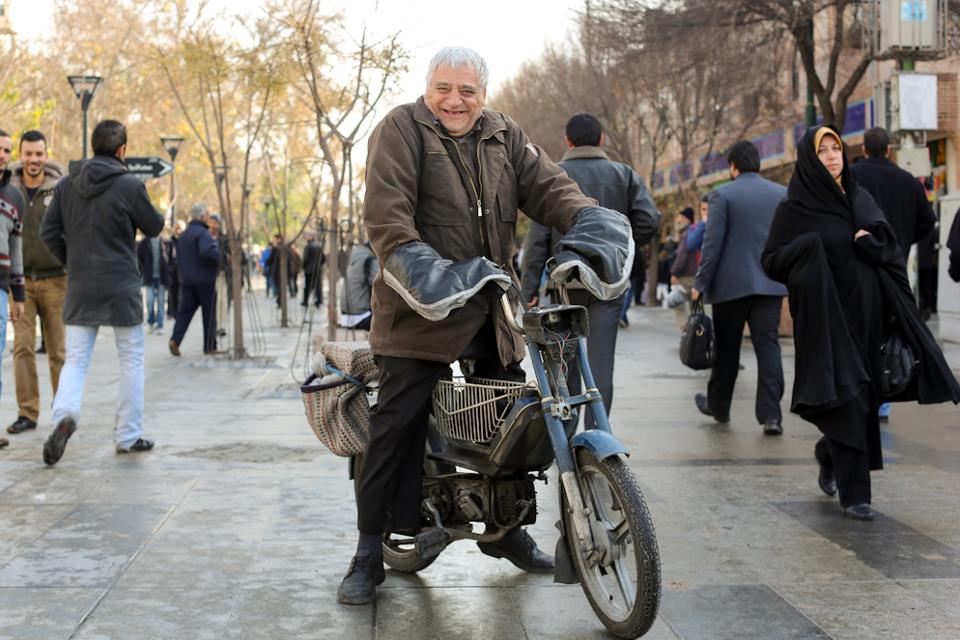
جولیا: عجب برنامه فشرده و شلوغی داره !
مارتا: و سرانجام ما همه به راز واقعی زندگی پی بردیم !
اریک: به نظر میاد واقعا داره از زندگیش در عین سادگی لذت میبره و میدونه چجوری شاد باشه
******************
اصفهان

کتی: شبیه Liv Tyler هست
یک نفس از کوفه تا تهران
همیشه فکر می کردم چگونه می شود شیعه در برابر امامش صف آرایی کند و این اسوه طهر را براحتی ذبح کند !
اما به نظر از چند روز پیش باید کمی پخته تر به این مقوله نگاه کنم ....

اینجا سرزمین اشغالی نیست.
این عکس یک بانوی فلسطینی نیست . بحرینی نیست. اصلا عرب نیست.فارس است.
در قلب تهران و در میدان پونک ؛ بخاطر امر به معروف و نهی از منکر و به جرم زینت بدنش به یادگار زهرای مرضیه با او چنین کردند.
آنقدر از تند رویها گفتیم و گفتیم تند است و خوب نیست که امروز اینچنین بر تارک چادر می تازند. آنهم نه یهود و نصاری ؛ که جوانی شیعه که فقط یک گناه دارد . او نه علی را می شناسد و گمان می کند می شناسد و نه زهرا را درک نموده است و گمان می کند درک کرده است.
اگردیروز انسانی به نام حسین و بخاطر جانبداری از حق ذبح شد ؛ هان ای دل عبرت بین که یادگار حسین و زینب در رستاخیر ذبح عظیم است. این اتفاق از منظر یک مردم نگار معلول است و نشانه بیماریی در حال پیشرفت ... پس باید به گونه ای دیگر دید.....
راستی می دانید سانتافه ها چه نقشی در بر اندازی حکومت اسلامی اندلس (اسپانیا) داشتند؟
 سلام من علی رضا ب.د